A horror film built on technology the audience already lives inside — and a window of time that won't stay open.
There's a technology built into every high-end VR headset — Meta Quest, PlayStation VR2, Apple Vision Pro — called foveated rendering. The idea is simple: the eye only sees in full detail at the center of its gaze. Everything in the periphery is blurry, low-resolution, half-invented by the brain. So the headset tracks where you're looking, renders that spot in full 8K detail, and lets everything else drop to low-poly filler.
You never notice — because you're never looking there.
Terrifying. Not as a tech problem. As a story.
"What if that wasn't just a display trick? What if that was a property of reality itself — and something had figured out how to live in the part of the world you're not rendering?"
That's DEMIURGE. Maya's world obeys the same rules as the headset showing it to you. She's not haunted. Her reality is buffering — and something is exploiting the lag.
Watching a film and being inside one are not the same thing.
A standard cinema — even through a headset — keeps you at a distance. You observe. You sit behind the glass.
DEMIURGE removes the glass.
180° stereoscopic capture means Maya's apartment isn't on a screen. It's around you. The void behind her is the void behind you. When the rendering fails — when the darkness between glances starts to move — there is no frame to retreat behind.
That is the difference between a spectator and a witness.
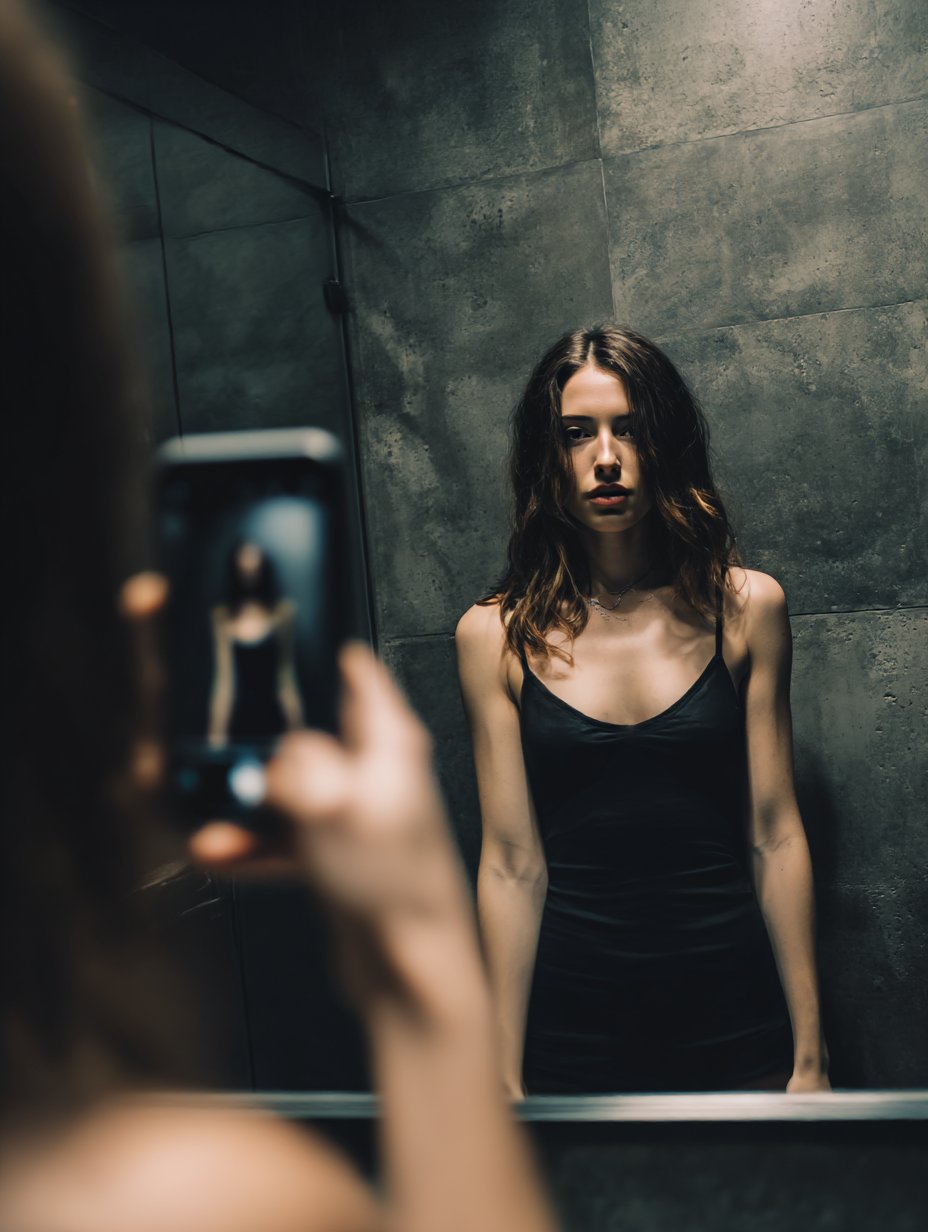
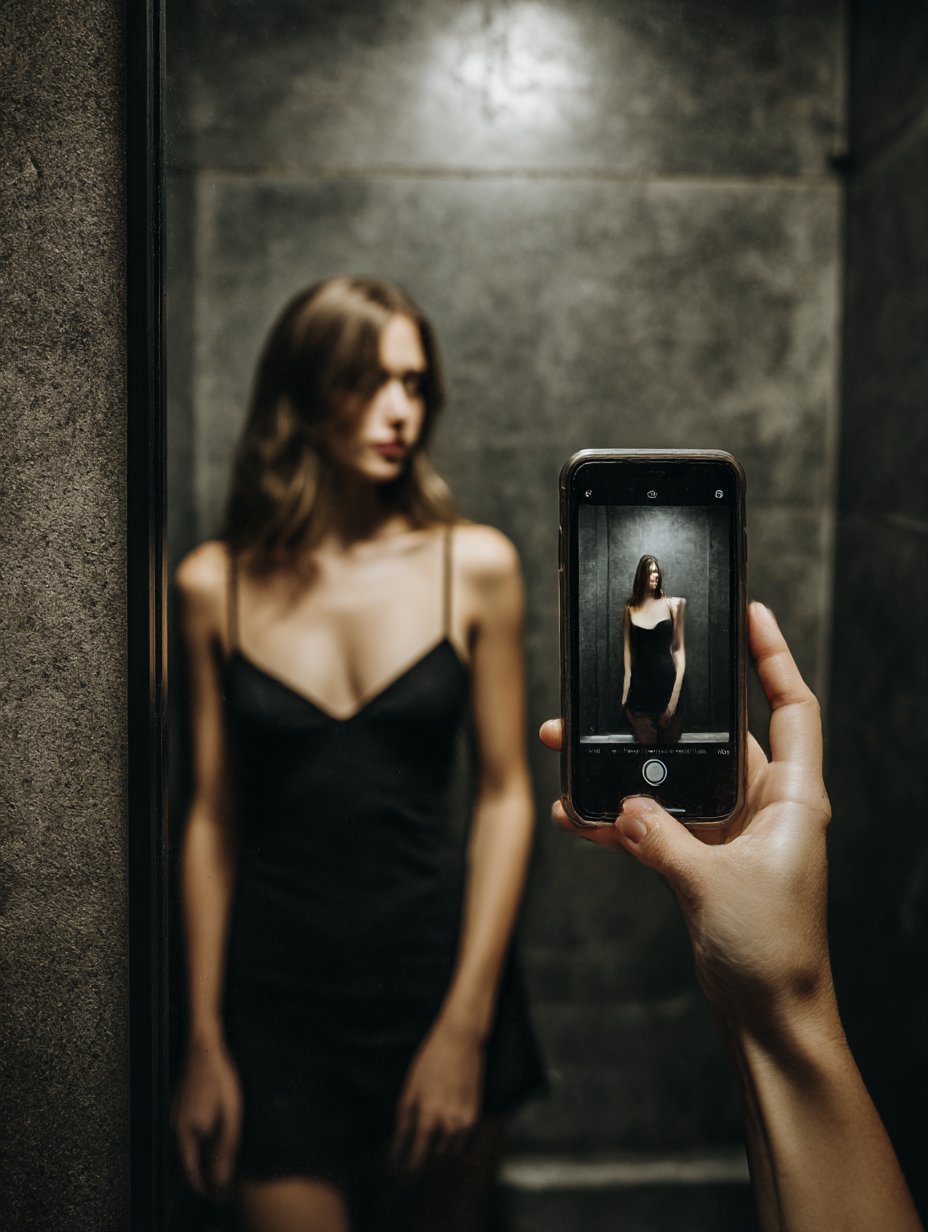
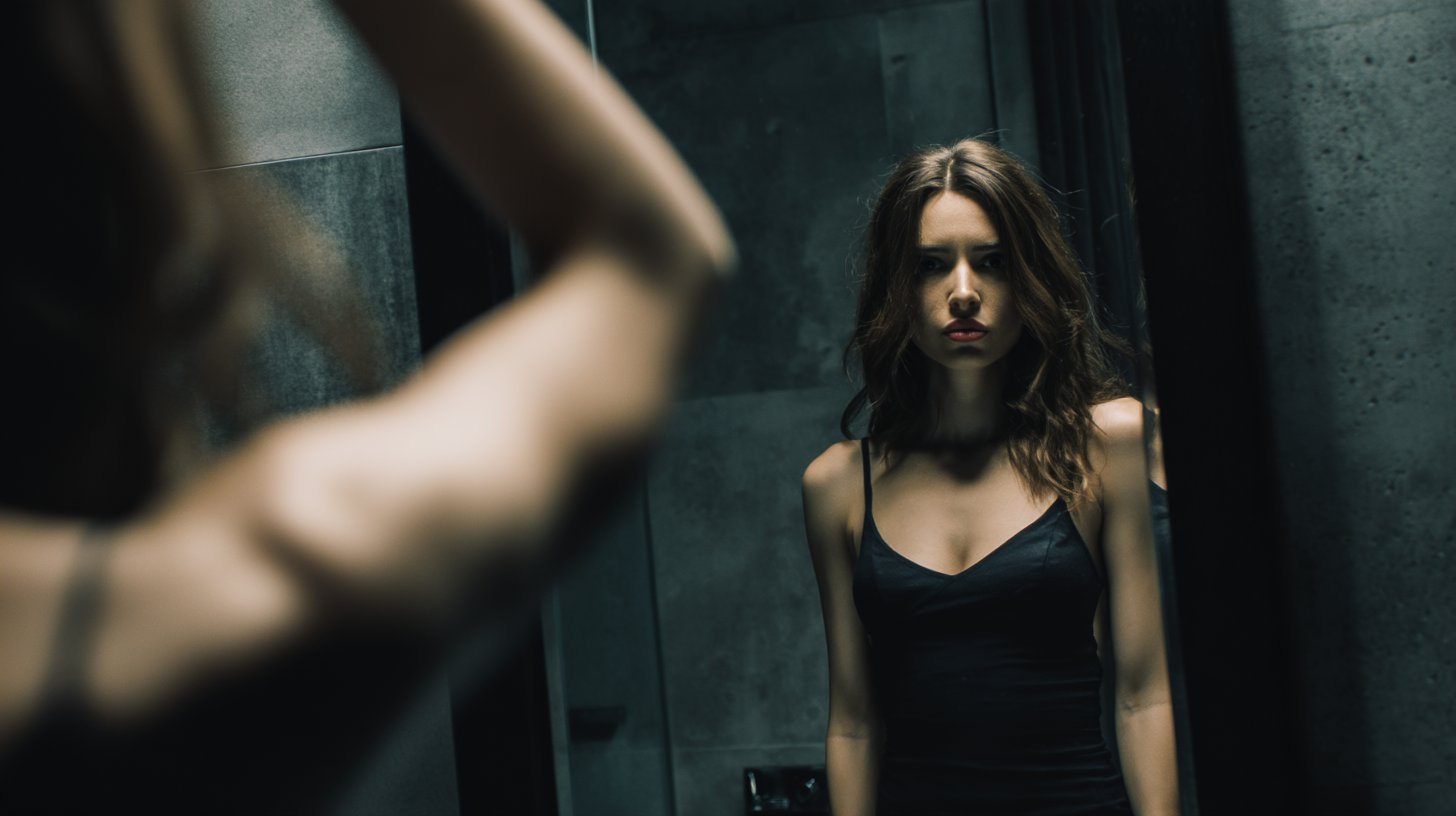
The mirror shows a reflection. The phone shows a reflection of the reflection. The screen inside the phone shows a third version — smaller, darker, slightly off.
Which one is Maya?
The film's central question is right there. Foveated rendering doesn't just affect what you see. It affects what exists.
Maya is filming herself when she notices it. She points the phone at the mirror — and the screen shows her something the mirror doesn't. A fully-rendered version of the space directly behind her. The blind spot she cannot turn to face.
That's the phone's only power in this world. Not what Maya sees. What she can't. Pointed at a mirror, it becomes a proxy for the part of reality that exists only when she's not looking at it.
As long as the battery is alive, she has that window. A way to surveil her own blind spot. When it dies — she loses the only tool that lets her see what's coming from behind.
The battery indicator in the corner is the film's real countdown clock. The audience knows what 1% means before Maya does.
Total environmental presence. The viewer is inside Maya's apartment. Everything she doesn't look at dissolves. The void isn't behind a door — it's in the space between every glance.
Vertical. Raw. Shot on a phone — the same format Maya uses as her only lifeline. When the battery hits 1%, two things die simultaneously: her window into the void behind her, and the audience's sense of safety.
Spatial computing just hit its first consumer generation. People are actually wearing headsets now. They know what it feels like to see the world through a rendered layer — and understand, somewhere deep, that what they're seeing is being calculated in real time.
That calculation can fail.
Right now, in 2025, that failure still feels like a threat. In a few years it won't. The seam will close. The glitch will become wallpaper. The dread of a reality that can buffer, drop frames, and leave dark gaps where something might be standing — that dread has an expiration date.
The audience already knows the world has seams. They've been inside a headset. They've felt the lag. This film opens those seams — while they can still feel it.
That window is closing. The film gets made inside it — or it doesn't get made at all.
DEMIURGE gives that feeling a name. And then it closes in.
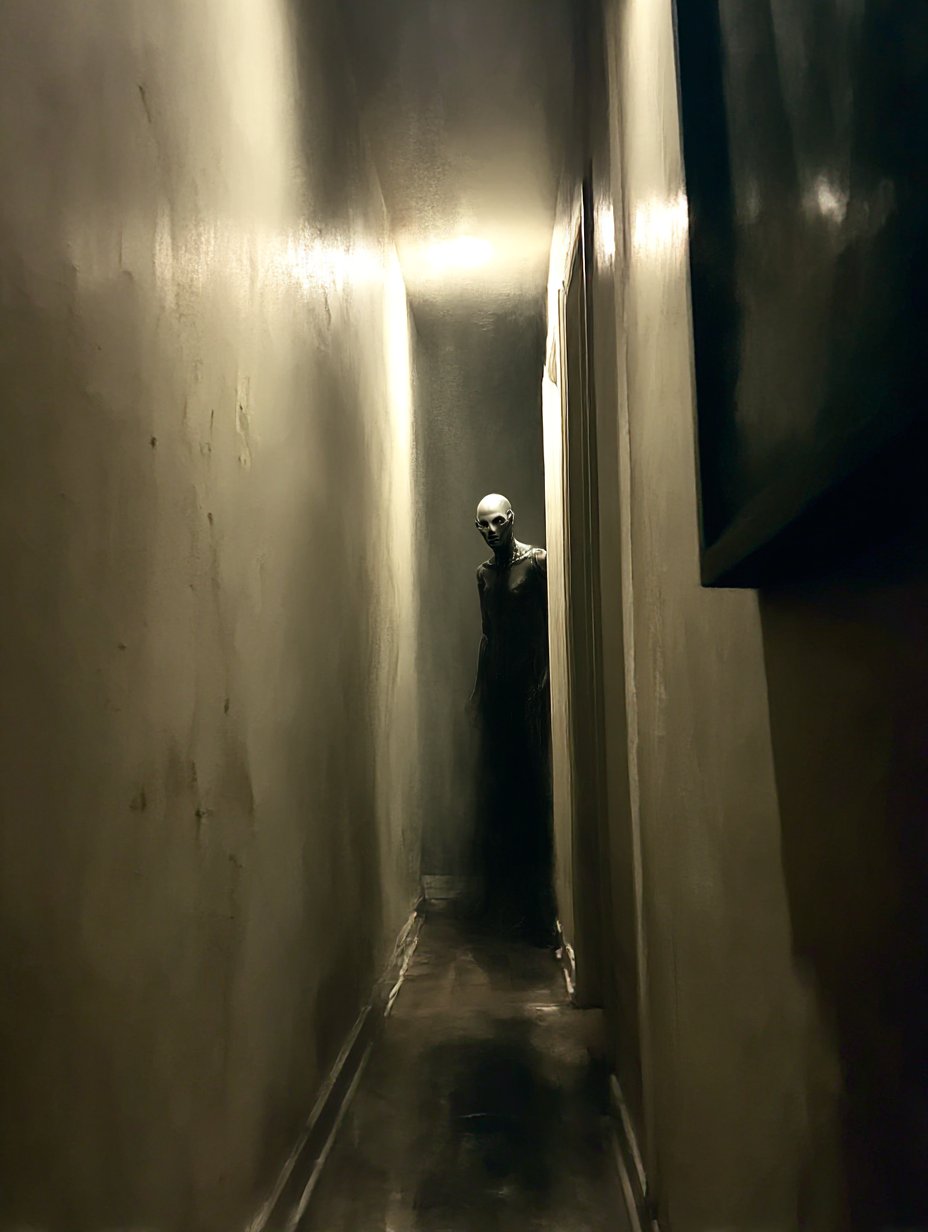
Formless in direct light. Fully present in the dark between glances. The moment Maya looks directly at it — it vanishes. The moment she looks away — it gains ground.
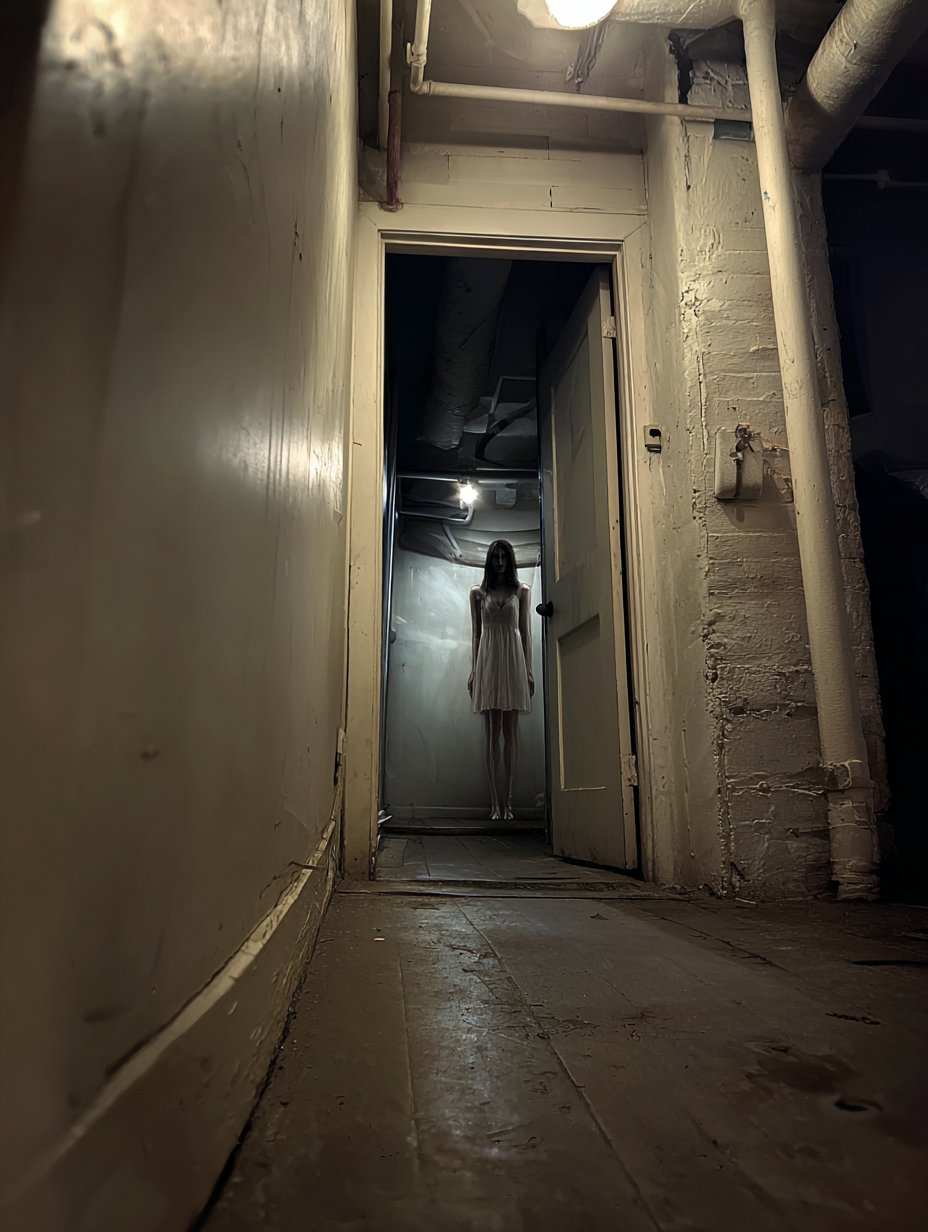
The hallway behind the door. She hasn't looked at it yet. The timecode is a film frame reference — this moment, exactly, at 18 minutes and 44 seconds in.
If something in here resonated — as a performer, collaborator, or investor — the portal is right there.